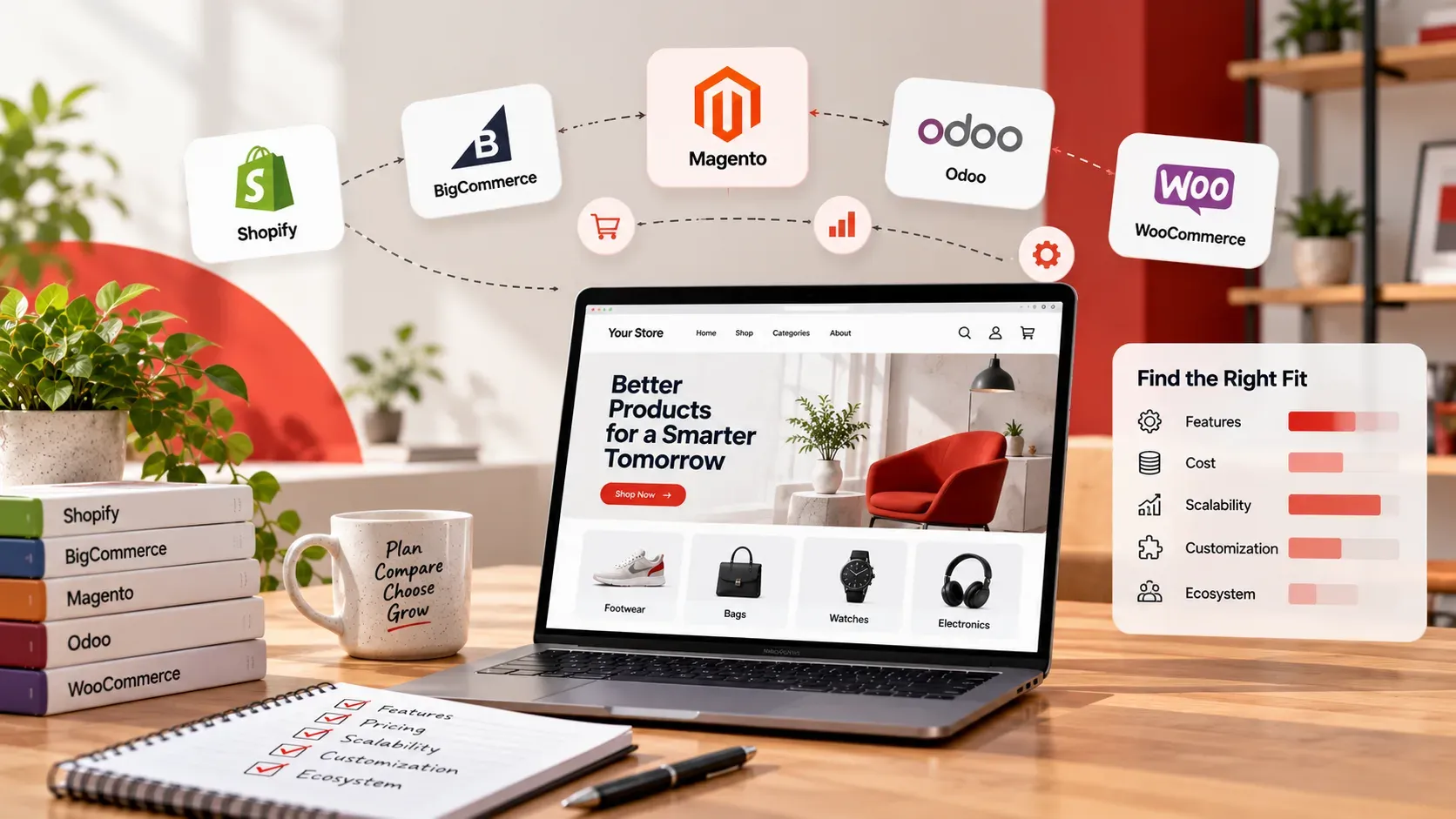
Choosing an e-commerce platform used to be a comparison of features and monthly fees. It still starts there, but the decision now involves much more: AI assistants that send shoppers to your store, headless and composable architectures, performance expectations, and fee structures where payment and transaction costs matter as much as the subscription.
This guide compares twelve leading platforms, from hosted builders to enterprise suites and open-source frameworks, and explains how to match one to your business. We deliberately do not quote prices. Plans, transaction fees and payment rules change often, so we use simple Low, Medium and High ratings and tell you what to check before you commit.
How to Read the Ratings
- Cost (Low, Medium, High): the total cost of ownership over the first few years, including subscription or licence, payment and transaction fees, paid apps or extensions, hosting and development. It is not the entry price. A free platform can rate Medium or High once development and hosting are counted.
- Ease of use: Easy, Moderate or Technical.
- Ecosystem: Limited, Moderate, Large or Very large, covering apps, plugins, themes and available developers.
- Time to launch: Days, Weeks or Months for a typical store with content ready.
- Performance: how fast a well-built store runs, not a guarantee. Hosting, themes and apps affect every platform.
1. AI and agentic commerce. Shoppers increasingly discover and buy products through AI assistants and AI search. Open protocols such as the Universal Commerce Protocol (UCP), developed by Google and Shopify, and the Agentic Commerce Protocol (ACP), developed by OpenAI and Stripe, let AI agents read catalogs and complete purchases. This area moves fast: at least one major AI checkout feature was retired within months of launching. Platform readiness also varies. Shopify handles the protocols for merchants through its Agentic Storefronts, BigCommerce, WooCommerce and others rely on partner programs or plugins, and Adobe Commerce or custom builds usually need custom work. On every platform, clean and structured product data is the foundation.
2. Headless and composable commerce went mainstream. Many brands now separate the storefront from the commerce engine, using tools such as Shopify Hydrogen, API-first platforms, composable suites like commercetools, or open-source engines like Medusa. It gives freedom and speed, but it also adds build and maintenance cost, so it is not right for every store.
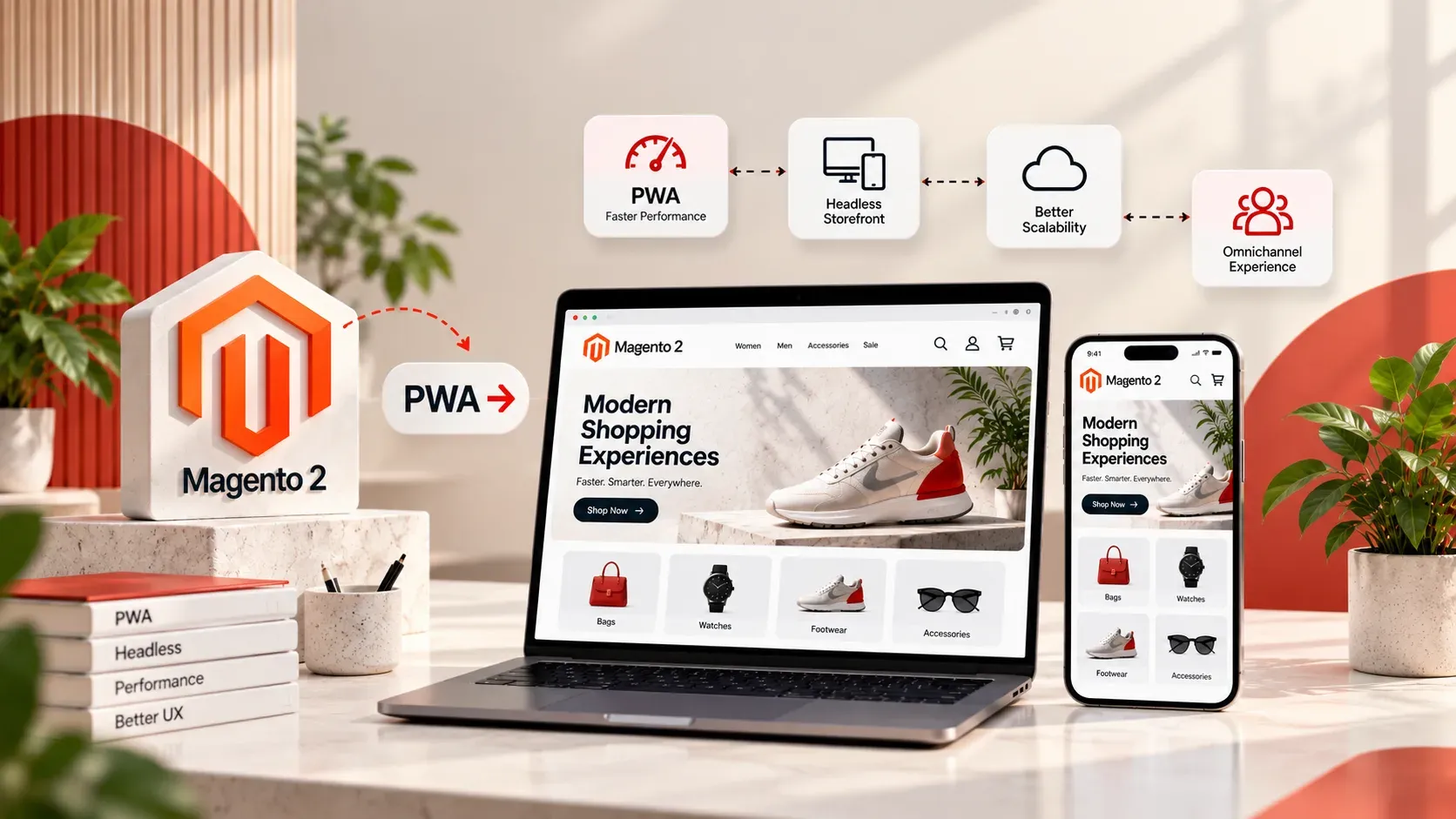
3. Performance gaps are closing. Magento's Hyvä theme is now free and open source, which makes a fast storefront far more affordable on Adobe Commerce and Magento Open Source.
4. Total cost is more than the subscription. Payment gateway rules, transaction fees, app subscriptions and development all change what a platform really costs. Always read the fee rules for your preferred payment provider.
5. AI inside the admin. Most hosted platforms now ship AI assistants for product copy, images, reporting and customer support.
The Platforms at a Glance
| Platform | Type | Cost | Ease of use | Ecosystem | Time to launch | Best for |
|---|---|---|---|---|---|---|
| WooCommerce | Open source (WordPress) | Low to Medium | Moderate | Very large | Weeks | Content-led and WordPress stores |
| BigCommerce | SaaS | Medium | Easy to Moderate | Moderate | Days to weeks | Growing brands, B2B, multi-storefront |
| Magento / Adobe Commerce | Open source and cloud | High | Technical | Large | Months | Complex catalogs, B2B, enterprise |
| PrestaShop | Open source | Low to Medium | Moderate | Moderate | Weeks | Small to mid-sized, multilingual shops |
| OpenCart | Open source | Low | Moderate | Moderate | Weeks | Small, lightweight stores |
| Shift4Shop | SaaS | Low | Easy to Moderate | Limited | Days | Small to mid-sized merchants |
| Medusa.js | Open source (headless) | Medium | Technical | Growing | Weeks to months | Developer-led custom builds |
1. Shopify
- Type: SaaS (hosted)
- Cost: Medium. Cheap to start, but apps, payment arrangements and higher plans raise it as you grow.
- Ease of use: Easy
- Ecosystem: Very large
- Time to launch: Days
- Technology: Liquid themes, React-based Hydrogen for headless, Ruby on Rails backend
- Best for: Small businesses to large brands; Shopify Plus for high-volume and complex needs
- Performance: Very good
Watch out for: app costs that add up, extra fees when you use an outside payment gateway, and limits on deep back-end customisation.
2. WooCommerce
- Type: Open-source plugin for WordPress
- Cost: Low to Medium. There is no licence fee, but hosting, extensions, maintenance and development add up.
- Ease of use: Moderate
- Ecosystem: Very large
- Time to launch: Weeks
- Technology: PHP, WordPress
- Best for: Content-led brands and anyone already on WordPress, from small to large stores
- Performance: Good, and heavily dependent on hosting and plugin choices
Watch out for: you own security, updates and hosting, and plugin conflicts and bloat can hurt speed.
3. BigCommerce
- Type: SaaS
- Cost: Medium
- Ease of use: Easy to Moderate
- Ecosystem: Moderate
- Time to launch: Days to weeks
- Technology: Hosted, proprietary, API-first and headless-friendly
- Best for: Growing and mid-market merchants, B2B sellers, multi-storefront setups and large catalogs
- Performance: Very good
Watch out for: a smaller app ecosystem than Shopify, and payment rules. Check which payment providers are approved and what fees apply to others.
4. Magento (Adobe Commerce)
- Type: Open source (Magento Open Source) and commercial cloud (Adobe Commerce)
- Cost: High
- Ease of use: Technical
- Ecosystem: Large
- Time to launch: Months for complex setups
- Technology: PHP, MySQL, with Hyvä or Luma storefronts
- Best for: Mid-sized to large businesses with complex catalogs, B2B needs and heavy ERP, PIM or OMS integration
- Performance: Good, and very good with Hyvä and proper hosting
Watch out for: it needs a skilled team and solid hosting, and AI-agent readiness usually requires custom development.
5. Wix
- Type: SaaS
- Cost: Low
- Ease of use: Easy
- Ecosystem: Moderate
- Time to launch: Days
- Technology: Hosted, proprietary
- Best for: Small businesses and individuals; Wix Studio targets agencies
- Performance: Good
Watch out for: limited fit for large catalogs, complex integrations and custom checkout logic, and moving away later takes work.
6. Squarespace
- Type: SaaS
- Cost: Low
- Ease of use: Easy
- Ecosystem: Limited
- Time to launch: Days
- Technology: Hosted, proprietary
- Best for: Creators, portfolios and design-led small brands
- Performance: Good, especially for simple sites
Watch out for: limited extensibility and few advanced features for B2B, multichannel or complex inventory.
7. PrestaShop
- Type: Open source
- Cost: Low to Medium
- Ease of use: Moderate
- Ecosystem: Moderate
- Time to launch: Weeks
- Technology: PHP, MySQL
- Best for: Small to mid-sized shops, especially multilingual and multi-currency stores common in Europe
- Performance: Varies with hosting
Watch out for: module quality varies, and the developer community is smaller than WooCommerce or Magento.
8. Salesforce Commerce Cloud
- Type: SaaS (also called Salesforce B2C Commerce)
- Cost: High
- Ease of use: Technical
- Ecosystem: Moderate, largely partner-built
- Time to launch: Months
- Technology: Hosted, proprietary
- Best for: Large enterprises already invested in Salesforce for CRM, marketing and data
- Performance: Very good, built for scale
Watch out for: high cost, dedicated teams or partners, and long implementations.
9. OpenCart
- Type: Open source
- Cost: Low
- Ease of use: Moderate
- Ecosystem: Moderate
- Time to launch: Weeks
- Technology: PHP, MySQL
- Best for: Small stores that want a lightweight, self-hosted cart
- Performance: Good with the right hosting
Watch out for: limited fit for headless builds, complex B2B and AI-agent readiness.
10. Shift4Shop
- Type: SaaS (formerly 3dcart)
- Cost: Low, though it depends on how you handle payments
- Ease of use: Easy to Moderate
- Ecosystem: Limited
- Time to launch: Days
- Technology: Hosted, proprietary
- Best for: Small to mid-sized merchants, especially US-based ones comfortable with Shift4 Payments
- Performance: Good
11. Odoo eCommerce
- Type: Open source (Community) with paid Enterprise and SaaS options
- Cost: Medium
- Ease of use: Moderate
- Ecosystem: Large
- Time to launch: Weeks to months
- Technology: Python, JavaScript, PostgreSQL
- Best for: Businesses that want store, inventory, accounting, CRM and fulfilment in one system
- Performance: Good with proper optimisation
Watch out for: it needs Odoo expertise, and storefront design flexibility is more limited than with Shopify or a custom frontend.
12. Medusa.js
- Type: Open-source headless commerce
- Cost: Medium. There is no licence fee, but you need developers and hosting.
- Ease of use: Technical
- Ecosystem: Growing
- Time to launch: Weeks to months
- Technology: TypeScript, Node.js, PostgreSQL, with a React or Next.js storefront
- Best for: Developer-led teams building custom, B2B or marketplace stores
- Performance: Very good and highly scalable
Watch out for: you build the storefront and much of the admin customisation yourself, there are fewer ready-made extensions, and projects still on version 1 face a real migration.
Other Platforms Worth Knowing
If you are building a composable or enterprise stack, also look at commercetools, Shopware, Saleor, Vendure and Sylius. They suit teams with strong engineering resources and specific architecture needs.
Which Platform Fits Your Business?
| Your situation | Strong options |
|---|---|
| Starting out or selling a small catalog | Shopify, Wix, Squarespace |
| B2B, wholesale or multi-storefront | BigCommerce, Adobe Commerce, Shopify Plus |
| Complex catalog with heavy ERP, PIM or OMS integration | Adobe Commerce, Odoo |
| Store tied closely to inventory, accounting and CRM | Odoo |
| Custom, developer-led or marketplace build | Medusa.js and other headless options |
Questions to Ask Before You Decide
- 1What will it really cost? Count subscription or licence, payment and transaction fees, paid apps, hosting and development, not just the entry price.
- 2What do we need to integrate? ERP, PIM, OMS, marketplaces, shipping, accounting and CRM.
- 3How ready is it for AI shopping? Ask about structured product data, feeds and support for agentic commerce protocols.
- 4Do we need headless? Only choose it if you have the team to build and maintain it.
- 5Who will run it? Match the platform to your team's skills and your appetite for maintenance.
- 6How hard is it to leave? Check data export, redirects and lock-in before you sign.
- 7How will it perform and rank? Look at Core Web Vitals, SEO controls and the quality of themes.
Frequently Asked Questions
Which e-commerce platform is best for beginners? Shopify, Wix and Squarespace are the easiest to start with. Shopify is the strongest if you expect to grow.
Which platform has the lowest cost? Simple hosted builders like Wix and Squarespace usually cost least to run for small stores. Free and open-source platforms are not necessarily cheap once hosting, development and maintenance are included.
Which platform is best for B2B? BigCommerce and Adobe Commerce have strong built-in B2B features. Odoo is a good fit when B2B orders connect closely to inventory and accounting.
Do I need a headless platform? Most stores do not. Choose headless when you need a highly custom experience, multiple frontends or deep integrations, and have the team to support it.
Will AI shopping agents affect my store? Increasingly yes. Keep your product data accurate and structured, and ask your platform how it connects to AI shopping channels.
Conclusion
The platform you choose shapes your store's functionality, speed, costs and ability to grow. There is no single best option, only the best fit for your catalog, team, integrations and plans. Start from your business needs, weigh the total cost of ownership rather than the sticker price, and plan for AI-driven shopping channels from day one.
Not sure which platform to pick, or planning a migration? Wisenetic helps businesses choose, build and integrate e-commerce platforms, including Magento (Adobe Commerce), Odoo and custom multichannel integrations. Contact us at info@wisenetic.com.